Your Cyber Insurance Claim Can Be Denied Before the Breach Even Happens
October 5, 2026
Randy Hall, CEO— AI-assisted and reviewed prior to publication.
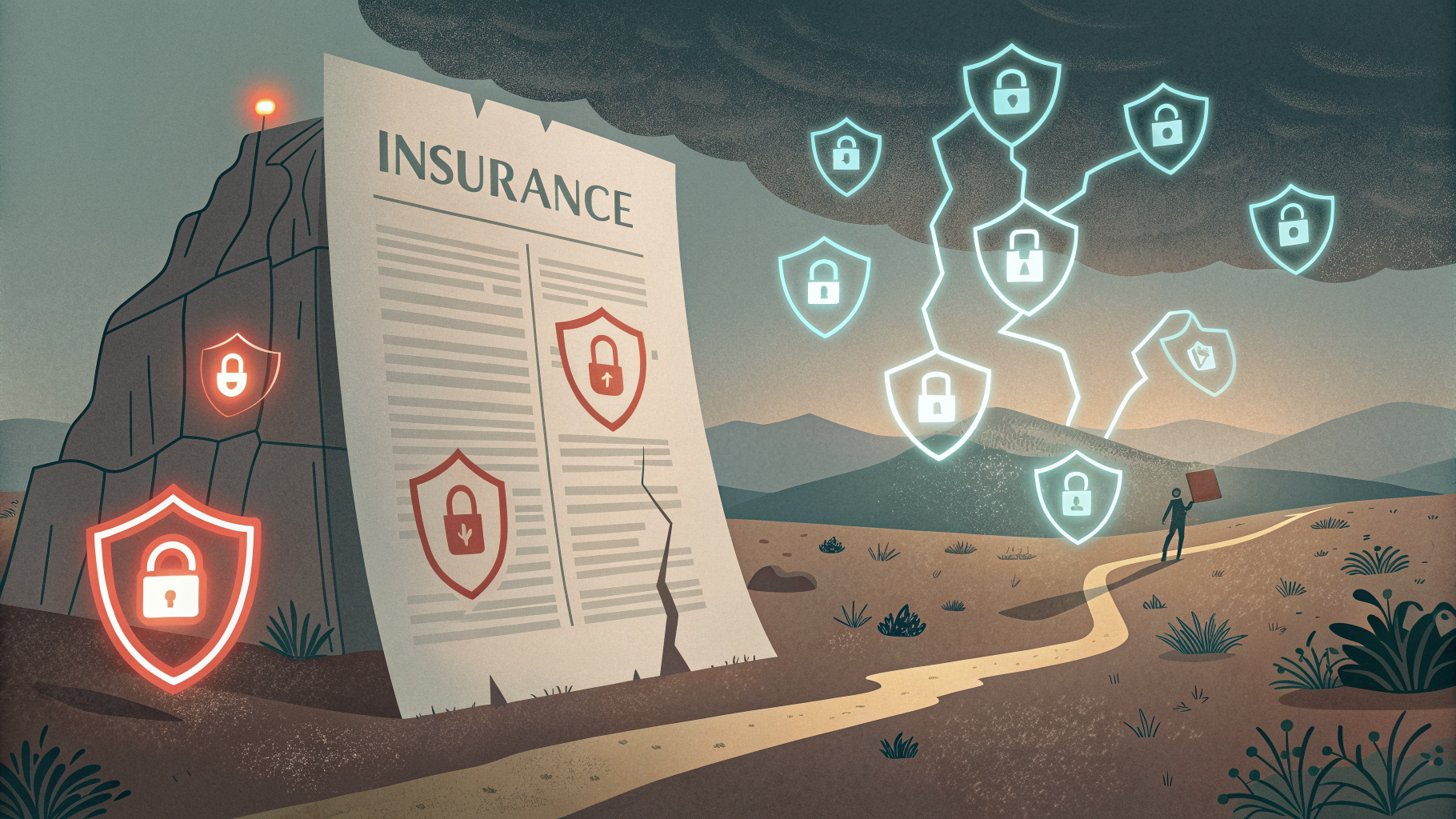
Cyber insurance claims increasingly get denied for a reason that has nothing to do with the attack itself: the application said a control was in place, and a post-breach investigation found it wasn't. That gap between attestation and reality, not the ransomware or the breach, is what voids coverage. The fix isn't a better broker. It's a security team that can actually verify what it signs.
Does Your Security Team Know What the Insurance Application Is Asking?
Most organizations treat the cyber insurance application as a form IT fills out once a year. That assumption is the problem. Modern applications are detailed technical questionnaires that ask specific, auditable questions about multi-factor authentication coverage, endpoint detection and response deployment, backup immutability, and privileged access controls, and a sworn statement at the bottom makes every answer part of the binding contract.
Insurer applications now name exactly who is supposed to be answering. Beazley's standard cyber questionnaire, for example, asks applicants to identify a specific cybersecurity point of contact, described as a CISO, risk manager, or similar role, before it asks a single technical question. If nobody in that role can say with confidence whether MFA is enforced on every admin account, not just email, you are already exposed before the policy is bound.
The questions have also gotten harder to fudge. Industry tracking of 2025 underwriting data found that 99% of cyber insurance applications now include specific MFA implementation questions, alongside similarly detailed questions on EDR, privileged access management, immutable backups, and patch cadence. A growing share of carriers also run external attack surface scans before binding coverage, which means your answers get checked against what a scanner can already see from outside your network.
What Happens When the Application Doesn't Match the Environment?
It gets denied, and the courts have already backed that outcome. In Travelers Property Casualty Co. of America v. International Control Services, the insurer moved to rescind a policy after discovering the insured had represented that MFA was deployed across its systems when enforcement was incomplete. The dispute wasn't about whether MFA would have stopped the ransomware. It was about whether the company had told the truth on the form that priced and issued the policy.
That case set a pattern underwriters have leaned on since. The National Association of Insurance Commissioners notes in its own market report that insurers increasingly rely on deep telemetry from an organization's own technology stack to inform risk, with qualification standards that require rigorous operational and cybersecurity hygiene, not self-reported checkboxes. The same report points to the July 2024 CrowdStrike outage as a reminder that even non-malicious third-party failures now factor into how insurers model exposure. Attestation accuracy is no longer a formality. It is underwriting evidence.
The Controls Underwriters Actually Score
Carrier applications have converged on a short list of controls that get the closest scrutiny. Marsh's own market analysis found that 12 cyber hygiene controls are now viewed as essential by underwriters when they evaluate a renewal or new policy. In practice, five of those show up on almost every carrier's questionnaire:
- Multi-factor authentication enforced on email, remote access, and every privileged or admin account, not just the easiest surfaces to cover
- Endpoint detection and response deployed across servers and endpoints, with monitored alerting, not just an installed agent
- Backups that are immutable or offline, with documented and tested restores rather than an assumed recovery path
- Privileged access management, including vaulted and rotated service accounts separated from daily-use logins
- Patch management with a defined SLA for internet-facing and critical vulnerabilities, and a measured compliance rate against it
Each of those is a yes-or-no question on paper and a configuration detail in practice. The distance between the two is exactly where misrepresentation claims get built.
Why Certified Staff Change the Attestation Equation
This is where certification investment becomes a business decision rather than a professional development line item. Insurers draw a real distinction between awareness training and technical competence. One analysis of carrier training requirements notes that technical security training is verified through certifications such as CISSP, CISM, and GIAC, and treated as a prerequisite for a security team's operational competence, separate from the annual phishing-awareness module every employee clicks through.
That distinction matters because the person filling out the application is making a legal representation about systems they may not fully understand. A staff member without formal training in access control architecture, identity governance, and security operations is more likely to answer "yes" to "is MFA enforced everywhere" based on what the help desk told them last quarter, rather than what a configuration audit would actually show. A team trained against a structured body of knowledge, such as the domains covered in Forge University's CISSP certification prep, is far more likely to know the difference between MFA on email and MFA on every privileged account, and to flag the gap before it becomes a signed misrepresentation.
This is also a governance question your leadership team should be asking before the next renewal, not after a denied claim. Who at your organization can speak, with documentation, to every control on your carrier's questionnaire? If the honest answer is "whoever filled it out last time," that is a staffing gap with a dollar figure attached. If you want to see how a structured study path maps to the access control, risk management, and security operations domains underwriters actually ask about, Forge University's certification resource hub lays out the curriculum and answers the most common planning questions.
Building a Team That Can Stand Behind What It Signs
The practical fix is not a new insurance broker or a longer questionnaire. It's a team capable of verifying its own answers before a carrier, or a forensic investigator after a breach, checks them. That means budgeting for certification the same way you budget for the EDR license or the backup tooling itself, because the application asking about those tools is only as good as the person who can attest to them accurately.
If you're responsible for deciding where training dollars go this year, treat the insurance questionnaire as a diagnostic. Walk it line by line with whoever currently owns the answer, and see how many responses would survive a post-incident audit. Where the honest answer is "not sure," that's your training priority, not your marketing budget's. If you want a study plan built around closing those specific gaps, you can start training whenever you're ready, rather than finding out the gap exists during a claims investigation.
None of this is about fear of a hypothetical breach. It's about what happens to a real claim when the paperwork doesn't match the environment, which is now a documented, court-tested outcome rather than a theoretical one. The organizations that keep their coverage intact are the ones whose security staff can prove, not just assert, that what they signed is still true.